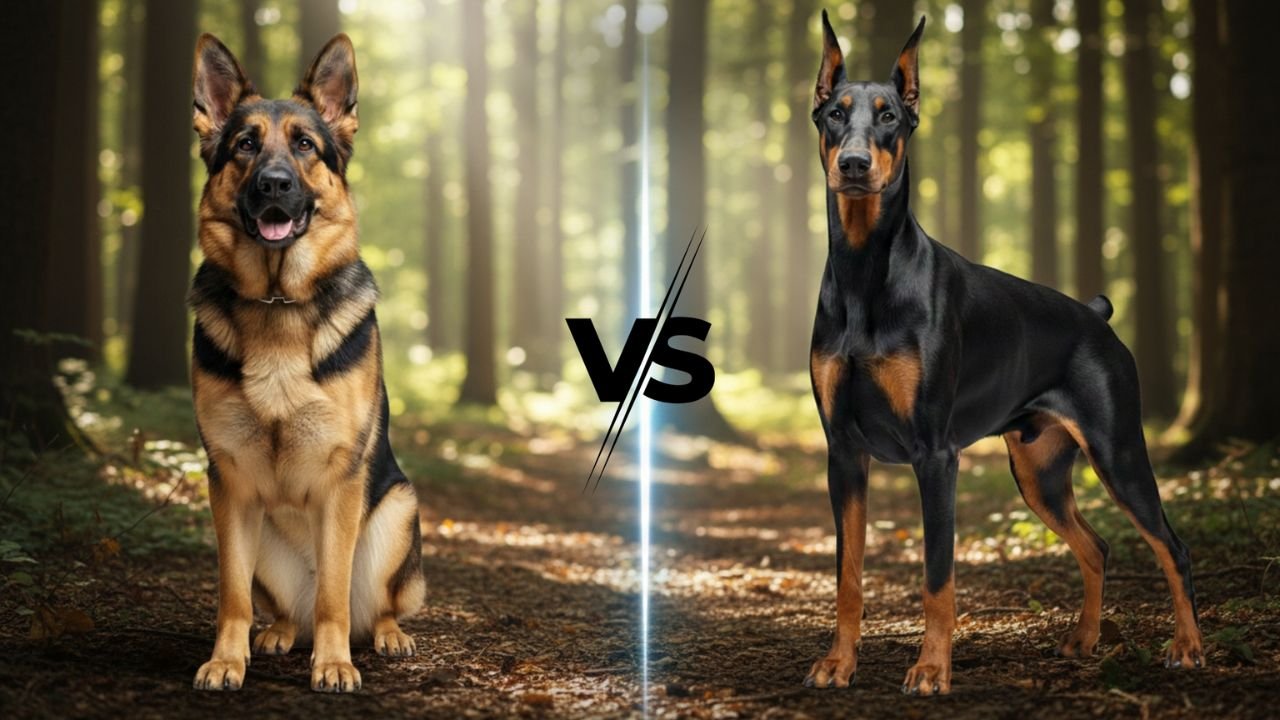
When considering a guard dog or a loyal companion, the German Shepherd and Doberman Pinscher are two of the most impressive breeds to choose from. Both dogs are known for their protective instincts, intelligence, and athleticism, making them ideal candidates for families looking for a reliable and energetic dog. However, while they share many similarities, each breed has its own set of distinctive characteristics that can make one a better fit depending on your lifestyle and needs.
Size and Strength
German Shepherds and Dobermans are both large, muscular breeds, but there are some notable differences in their size and physical traits.

Doberman Pinscher
Dobermans are sleek, powerful dogs with a distinctive wedge-shaped head and a compact yet muscular build. Their short, glossy coat comes in various colors, including black, blue, red, and fawn, with rust markings. With a bite force of 305 PSI, Dobermans are incredibly strong, making them formidable protectors.
German Shepherd
German Shepherds tend to be slightly larger in size compared to Dobermans, with a medium-length coat that can be black and tan, sable, or all-black. Their coat is weather-resistant, which helps protect them in extreme temperatures. German Shepherds have a bite force of 238 PSI, still impressive, but slightly weaker than the Doberman’s.
While both breeds are strong and muscular, Dobermans have an edge in terms of raw muscle and bite power, whereas German Shepherds tend to have more stamina due to their versatile working background.
Temperament and Personality

Both dogs are renowned for their loyalty and protective instincts, making them excellent family pets and guard dogs. However, their temperaments can vary slightly.
Doberman Pinscher
Dobermans are energetic, alert, and highly loyal. Despite their intimidating appearance, they are affectionate and form strong, inseparable bonds with their owners. They are generally patient with children, though they may unintentionally knock small children over during play. They do, however, have a high prey drive and may chase smaller animals, including cats.
German Shepherd
German Shepherds are equally loyal but have a more reserved and confident nature. They are incredibly versatile dogs, often employed as working dogs in various fields such as police, military, and search-and-rescue operations. German Shepherds tend to be more self-assured and less prone to being as excitable as Dobermans. They are great with children and can be excellent family dogs if given proper training and socialization.

Both breeds thrive on human companionship and need strong leadership from their owners. Early socialization is essential for both dogs to ensure that they grow up well-adjusted and confident.
Health and Lifespan
Doberman Pinscher
Dobermans typically have a lifespan of 10 to 12 years. Although they are generally healthy, they are prone to certain health conditions, including gastric dilatation-volvulus (GDV), dilated cardiomyopathy (a heart condition), and hip dysplasia. They are also more likely to suffer from Von Willebrand’s disease, a genetic bleeding disorder.
German Shepherd
German Shepherds have a slightly longer lifespan, typically ranging from 12 to 14 years. Like Dobermans, they can develop health issues such as hip and elbow dysplasia, GDV, and dilated cardiomyopathy. German Shepherds are also at risk for degenerative myelopathy, allergies, and some forms of cancer. Choosing a reputable breeder can help reduce the likelihood of some of these inherited health issues.
Training and Exercise Needs
Both breeds are highly intelligent and require plenty of mental and physical stimulation. However, their training styles differ.
German Shepherd
German Shepherds are known for their versatility and are often ranked among the smartest dog breeds. They respond best to positive reinforcement and consistent, reward-based training. Their strong work ethic makes them excellent candidates for canine sports, including agility, herding, and tracking. GSDs require at least two hours of daily exercise, making them well-suited for active owners.
Doberman Pinscher
Dobermans are also highly trainable but have a more independent streak. While they learn quickly, they may become more challenging to manage if not given firm, consistent training from an early age. Dobermans excel in obedience training, tracking, and agility, but they need an outlet for their energy, or they can become destructive. They too require daily exercise and benefit from activities like hiking, running, and obedience training.
Both breeds need ample exercise to stay mentally and physically healthy. German Shepherds may require slightly more consistent mental stimulation, while Dobermans benefit from structured training to harness their energetic nature.
Energy Level
German Shepherd
German Shepherds are known for their high endurance and energy levels. They thrive in environments where they have plenty of room to run, and their need for physical and mental stimulation is significant. These dogs require not only daily walks but also activities that challenge them mentally, such as puzzle toys or dog sports. GSDs were bred for sustained tasks like herding, making them ideal for owners who can provide them with regular, longer exercise sessions.
Doberman Pinscher
Dobermans, while also energetic, are slightly less enduring than German Shepherds. They tend to have bursts of intense energy followed by longer periods of rest. They excel in short, high-intensity activities and need plenty of opportunities to run and play. Their athleticism is more explosive, so providing them with regular playtime and exercise is crucial to avoid boredom and destructive behavior.
Natural Guard Instincts and Protective Temperament
Both breeds make excellent guard dogs, but there are some differences in their protective instincts.
German Shepherd
German Shepherds are incredibly protective and have a strong instinct to guard their home and family. They are brave and courageous, often willing to risk their lives to protect their loved ones. German Shepherds are naturally territorial and will alert their owners to any potential threats. However, they tend to be less aggressive than Dobermans, making them a more balanced option for families.
Doberman Pinscher
Dobermans have a stronger natural inclination toward guarding, and they can be more aggressive in their protection efforts. Their size, strength, and protective temperament make them ideal guard dogs. Dobermans are highly territorial and will fiercely defend their family and home. However, if not properly trained and socialized, their protective instincts can turn into overprotectiveness or aggression.
Conclusion
In the debate of German Shepherd vs. Doberman Pinscher, both breeds are outstanding choices for families or individuals seeking a loyal, protective dog. While German Shepherds are known for their versatility, intelligence, and endurance, Dobermans shine in their strength, protective instincts, and sleek athleticism.
If you’re looking for a dog that excels in versatility and has a more manageable exercise requirement, a German Shepherd might be the better fit. However, if you prefer a more compact, intense, and highly protective breed, a Doberman Pinscher may be ideal. Both breeds require active owners and early socialization, and either will thrive in environments where they can be active, engaged, and well-trained.
Ultimately, the decision between a German Shepherd and a Doberman comes down to your lifestyle, preferences, and ability to provide the right training and exercise for these energetic, intelligent dogs.